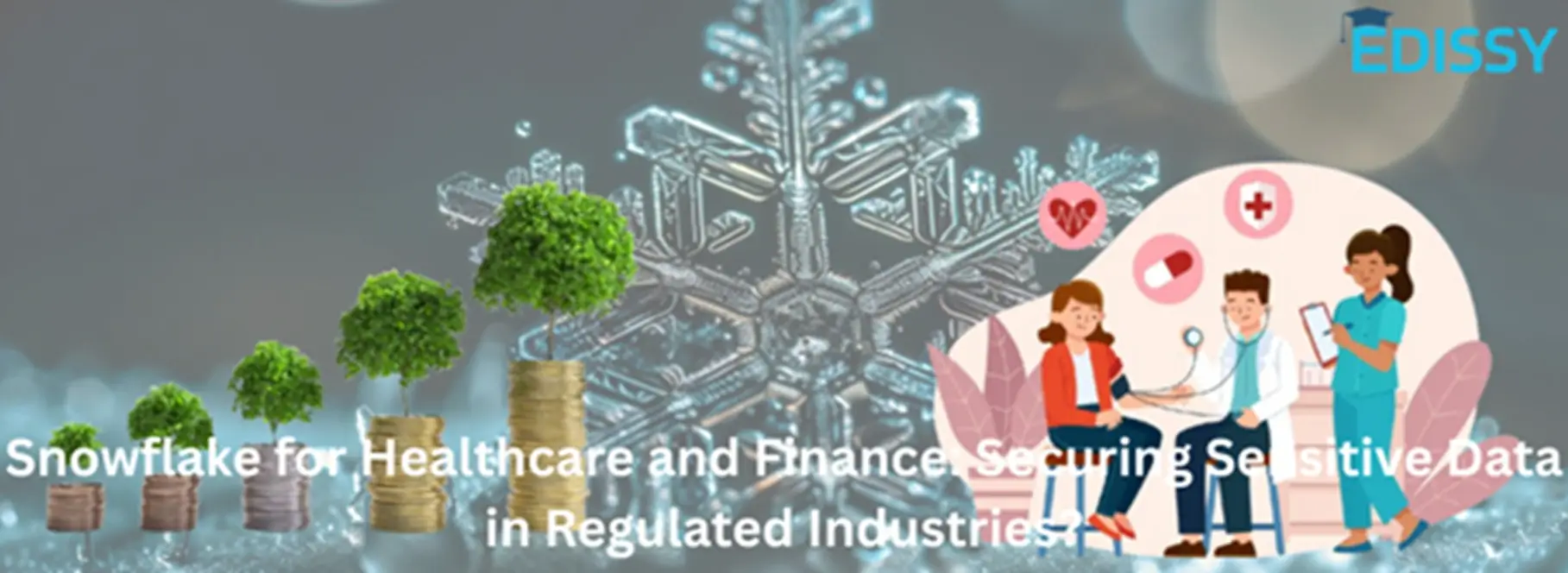
In today’s data-driven world, healthcare and finance sectors stand at the forefront of innovation, powered by vast amounts of sensitive information that must be protected, managed, and analyzed with precision. These industries, governed by strict regulatory requirements such as HIPAA, GDPR, and PCI-DSS, face increasing challenges in securing sensitive data while unlocking its full potential. Snowflake, a leading cloud data platform, has emerged as a trusted solution for organizations in healthcare and finance, enabling them to securely manage data while driving business insights, improving patient care, and enhancing financial services. Through advanced security frameworks, robust governance, and real-time analytics, Snowflake empowers organizations to meet compliance requirements while modernizing their data operations.
Healthcare organizations deal with complex data sets that include patient records, clinical trials, medical imaging, and insurance claims. Protecting this data is critical not only for safeguarding patient privacy but also for ensuring operational efficiency. Snowflake’s architecture allows healthcare providers to centralize their data from disparate sources into a unified data platform while applying encryption, masking, and access controls at every stage of the data pipeline. With dynamic data masking, role-based access controls, and end-to-end encryption, organizations can share data for research and collaboration without compromising patient confidentiality. This makes Snowflake an ideal solution for healthcare providers striving to balance compliance and innovation.
Similarly, the financial sector is under constant scrutiny to protect sensitive data, including customer account details, transaction histories, and credit reports. Any data breach or non-compliance can lead to regulatory penalties and reputational damage. Snowflake’s multi-layered security controls and auditing capabilities provide financial institutions with the tools they need to secure data while enabling advanced analytics for fraud detection, risk management, and personalized customer experiences. Through data encryption at rest and in transit, secure data sharing across partners, and continuous monitoring, financial organizations can meet compliance mandates and reduce operational risks Learners gain hands-on experience on how to architect secure pipelines, manage sensitive datasets, and ensure compliance with frameworks such as SOC 2 and ISO 27001.
One of the significant advantages of Snowflake is its ability to provide secure data sharing without creating copies of sensitive information. This feature is especially beneficial for healthcare research collaborations and interbank transactions where data integrity and confidentiality are paramount. By enabling live data sharing within governed environments, Snowflake helps reduce the risk of data duplication, leaks, or unauthorized access. The platform’s zero-trust security model further enhances protection by ensuring that only authenticated users with proper authorization can access specific data sets. With its built-in data classification tools, organizations can automatically tag sensitive information, allowing for smarter policy enforcement and reporting.
Want to know Snowflake from the scratch? Enroll today for Snowflake Online Course
Cloud-based data solutions often raise concerns about regulatory compliance, especially in sectors like healthcare and finance where data breaches can have severe consequences. Snowflake addresses these concerns by embedding compliance into its architecture rather than treating it as an add-on feature. The platform’s certifications for HIPAA, PCI DSS, SOC 1, and SOC 2 ensure that data handlers meet stringent industry requirements. Moreover, with data residency and regional controls, organizations can define where data is stored and processed, helping to comply with local regulations such as GDPR or CCPA.
Another crucial aspect of securing sensitive data is ensuring that access policies are consistently enforced and easily managed. Snowflake’s access control framework allows organizations to define granular permissions at the object level, ensuring that only authorized users can perform specific actions on sensitive datasets. By implementing attribute-based access control (ABAC), organizations can enforce rules based on user roles, data attributes, and environmental contexts. For healthcare systems managing multiple stakeholders — such as hospitals, insurance companies, and research centers — this flexibility ensures that data sharing happens securely without unnecessary barriers. Likewise, financial institutions benefit from role-based access that segregates data access across departments like compliance, audit, and analytics teams.
Beyond encryption and access controls, Snowflake’s continuous monitoring and auditing capabilities ensure that sensitive data is protected in real time. Through automated alerts, usage tracking, and anomaly detection, organizations can identify potential breaches or unauthorized activities as they occur. This proactive security posture allows healthcare and finance organizations to respond swiftly to threats, minimizing potential damage and ensuring trust among stakeholders. Snowflake’s integration with security information and event management (SIEM) tools also enables organizations to consolidate security reporting and streamline incident response workflows.
Finally, adopting Snowflake not only helps organizations comply with regulations but also unlocks new opportunities for innovation. Healthcare providers can accelerate research efforts by sharing anonymized datasets across academic institutions, leading to faster drug discoveries and improved patient outcomes. Financial firms can leverage secure data analytics to detect fraud patterns early, create personalized customer experiences, and improve credit risk assessments. Snowflake’s robust security framework ensures that such innovation happens without compromising data privacy or compliance.
In conclusion, Snowflake has emerged as a game-changer for regulated industries such as healthcare and finance by offering a secure, scalable, and compliant cloud data platform. With built-in encryption, dynamic data masking, fine-grained access controls, audit trails, and compliance certifications, Snowflake empowers organizations to protect sensitive data while accelerating business innovation. Edissy’s Snowflake Online Training, Snowflake Course, Snowflake Online Training, and Snowflake Online Course equip data professionals with the expertise to design, implement, and manage secure data environments aligned with industry best practices. As data continues to play a central role in transforming healthcare and finance, Snowflake remains the platform of choice for organizations striving to balance security, compliance, and innovation.



© Copyright 2023-24 EDISSY Solutions Private Limited | All Rights Reserved


 IND : +91-9000317955 IND : +91-9000271955